|
|
 |
|
|
| 13.Aug.26 |
Interview with Alexei Zakharov: Egosoft Composer and Sound Designer |
 |
|
|
 |
In the latest episode of Inside Egosoft, Joey sits down with Alexei Zakharov, composer and sound designer for Egosoft since 2003. Alexei is responsible for most of what you’ll hear in X4: Foundations, from the atmospheric music in your favorite sectors to the hum of your ship’s engines.
Since Alexei and Joey share many similar experiences as longtime musicians and producers, this episode contains some musings about their shared experiences in the field such as writing styles, inspiration, tools and techniques, and the details that listeners don’t always notice.
Below are some highlights from the conversation. Tune in to Inside Egosoft on all major podcast platforms to listen to this episode, and watch out for a new one later this month!
Listen to the Inside Egosoft Podcast:YouTube
Amazon
PocketCasts
iHeartRadio
Getting Started with Egosoft
Joey: How did you first become involved with Egosoft, at the very beginning?
Alexei: It was a long time ago. As far as I remember, it was summer 2003. I was a big fan of space games and movies when I was a kid. My first gaming platform was the ZX Spectrum. The most famous space game on the ZX Spectrum was Elite. I would call it the grandma of all space games.
When I had my first PC, I got my hands on X: Beyond the Frontier, and I was really shocked. Finally, that was it - the one I'd always wanted. When they announced X2, I was following every piece of news, every update they had. But one day I thought, “No, I am a musician, and I have to do something.”
“We Don't Need Any Techno Music”
Alexei: I was brave enough to write to Egosoft and tell them how much I loved the previous games, how amazing they were, and how I couldn't wait for X2. I said that, as a composer, I would like to propose that they use my music. After several days, I got a response. They said, “Thank you very much for your feedback. We appreciate it very much, but sorry, we don't need any techno music.”
I suppose that was some kind of misunderstanding or mistranslation. I was brave enough to send my track anyway, and maybe one day later I got a reply saying, “Oh, we like that. We like that a lot, and we definitely will use that music in our game.”
Ten Minutes Before the Deadline
Alexei: Then in August, they were making a rolling demo for X2. It was a demonstration of the game's engine, and they needed four different tracks for it. But there was a catch. I had to do it in a very tight time period. I think it was something like two or three days. I still remember delivering the tracks about ten minutes before the deadline. That was August 2003, I think. I would say that was the first time, and the first day, that I started working on X2.
The First Track
Joey: Do you recall the original demo you sent them?
Alexei: The first track I sent them - the one they said was amazing - was a track called “ Aurora.” You can find that on our X3: Albion Prelude soundtrack. I composed “Aurora” with my partner in crime, as I always say. His name is Pavel. We worked on trance tracks and electronic music tracks together, and he helped me a lot with composing “Aurora.” Before that, I hadn't sent any tracks. I had just said that I was making electronic music, and they thought I was making some kind of techno music.
What Has Changed Since 2003?
Joey: You've been a part of the musical identity of X for a pretty long time now. Looking back, has your approach changed much from your earliest work compared to today?
Alexei: To be honest, I don't think much has changed at all. I would say that software and hardware have evolved. Hardware is always changing, software is always evolving. But in my approach to sound design and music design, I don't think much has changed. You gain experience while learning all the new hardware and new software, and you never stop learning. If you stop learning, your music will start to stagnate and degrade. I think that's the most beautiful thing about our experience: we always have to learn something new.
Joey: You know, just the other day, I was actually talking about this over lunch with another friend of mine who's also a musician. We were talking about our old ideas, and how things I made when I first started - I almost wouldn't change anything about that. It’s the same brain. Musically, I’ve never really changed as a person. I love my old ideas. The only thing I would change, really, is that the mix would be a little better.
Alexei: People always say that we tend to love our first music genres when we are just 13 or 14 years old. Our taste is established around that age, and after that, we never lose that. It will evolve - it will change a little bit - but you still love all the music you loved back in your teenage years. The same is for music creation. I started composing back when I was 14, and after that, I think I still have the same core approach.
Shaping the Sound Together with Players
Joey: Do you remember a particular track from the early X games that made you think, “Yes, this is what X should sound like”?
Alexei: I don't think there's really one particular track, because it's a collaboration with the players. When you create something, you never know whether people will like it or not. But after some time, you get feedback from the players. You start to understand what people want to hear more of, what they don't like, and what kinds of compositions they appreciate more. So maybe it's a kind of collaboration with people afterward.
Writing Music Players Remember
Joey: How do you approach composing for a game where players can spend hundreds or even thousands of hours just existing in this universe?
Alexei: I don't think I'm doing anything intentionally. I just do what I feel is right. I'm not trying to attach myself to any specific genre or mood. What I'm trying to do is compose not just a track, but a song, with the structure of a song. I'm always trying to add some motif or idea that people will remember, and maybe they'll try to sing it without even noticing.
You may have noticed that a lot of game soundtracks nowadays are a bit forgettable. That's what I'm trying to avoid: making forgettable music.
Where a Track Begins
Joey: When you start writing a track for X specifically, how do you usually begin your process?
Alexei: It's always different. I would say it's a combination of processes. I try to talk to our designers - the people responsible for narrative, game design, and lore. We have a discussion, we talk, and then I start trying to compose. But even before that, I'm always trying to have many, many ideas collected in my head.
Even if I don't have a major task to compose a specific track, I'm always trying - morning, evening, midday - to sit at my keyboard and compose lots of ideas. If one of those ideas later connects with something we discussed, then I try to start a track from that.
Waking Up with an Idea
Joey: Maybe I wake up one morning and have an idea for something that sounds heroic, you know?
Alexei: Exactly! One of my tracks happened exactly like you explained. I was sleeping - or trying to sleep, but couldn't - and in my head I suddenly had an idea. I wanted to make a kind of choir with an electronic choir sound and make it completely as one. So I just woke up and started composing a theme.
Music and Player Emotion
Joey: How much do you think about things like player psychology or emotions when you're writing music?
Alexei: I don't think about psychology. I think about their feelings. I try to translate my own feelings through the music, and if people feel the same, I'll be happy. That's my goal.
Joey: Would you say you're trying to guide emotion when you're writing music for the game?
Alexei: I think the emotion I'm trying to produce through my music - the emotion I'm trying to convey to them - is about what that specific situation requires. If people in our company tell me they need this kind of track and this kind of emotion, I try to feel the emotion they're describing. I try to transform myself into that emotion.
“Positive Sadness”
Joey: Is there a favorite type of song for you, or a specific mood or atmosphere that you like to work with?
Alexei: One of my favorite kinds of sound or mood is what I call “positive sadness.” A lot of my tracks have that positive sadness. They're sad tracks, emotional tracks, but they're never completely dark or hopeless. That's my favorite thing to do. But the second one is the opposite. I love doing something like a full-blown orchestra - like Hans Zimmer - plus maybe guitars and something like that, with a full trailer-style sound.
The Signature Sound of X
Joey: Are there instruments or plugins that have become part of your “signature sound”?
Alexei: To be honest, the signature sound of X, I think, is the Virus TI - the Access Virus TI. That was the first hardware synthesizer I ever got. I would say it's the most versatile and one of the most beautiful-sounding synthesizers I've ever had. And yes, I would say that's maybe the sound of our game.
Time Restraints and Finishing Tracks
Joey: Does it come up often where you're working on music for X and think, “What if I remove this instrument and it fits the soundtrack better?”
Alexei: To be honest, I never do that. The most beautiful thing in our work is the time restraint. You always have to do something very fast, and because we have that time restraint, you don't have time to overthink things. Throughout all these years, I've learned one thing: always finish your track. If you start a track, you have to finish it. You have to have that kind of discipline in you. But if you overwork it - if you spend much more time than you should - you can ruin your track.
Joey: I have a personal style that drives one of my musician friends crazy. When I think I’m done with a song, I try to go through it and remove as many things as possible. It’s something I’ve done for many years. “Can I take out this drum kick? Can I remove this chord here?” Like I’m trimming the fat. He hates watching me work in the studio because I’ll delete things and he’ll say, “But that was really cool!”, and I’ll say, “Well, the message is the same even if it’s gone. So do I really need that part?”
Alexei: I have a friend - his name is also Alexei - and he has the same problem as you. He has a lot of demo tracks composed, but few of them are finished. Through all these years, I’ve learned one thing: always finish your track. If you start a track, you have to finish it. Work until you like it, but with time constraints, that’s the problem. If you overwork, you will spend so much more time than you have to, and you will ruin your track.
Electronic Music and Emotion
Joey: There's this notion that electronic music feels less human than physical instruments. Do you think electronic music conveys emotion differently? Worse? Better?
Alexei: Of course not. It won't communicate better or worse. It depends on how much you invest in that track. If you fully invest your emotions, your heart, and your soul into a track, any track can connect with people. Always try to put all your heart, soul, and compassion into the track. After that, even an electronic track can sound amazing.
Joey: I agree. I think that being authentic is the most important part. Someone can pick up a guitar and play a really uninspired pop song that’s superficially human, but it’s the same thing you’ve heard a million times.
Or someone could spend hours behind some synthesizers and program something that’s straight from their heart. Something that moves you, that makes you feel what they’re feeling. The most important thing is that you’re authentic and truly communicating your ideas.
Something I like to point out is that when I’m working on music - in my brain - I’m not making any mistakes in my ideas. People will point to older music where there’s less editing and say, “I like all the mistakes and sloppiness. It sounds more human.”
But, for me, when I’m imagining a riff in my head, there aren’t timing mistakes. It’s a perfect groove in my brain. It’s just that my body is limited. If I can edit a riff I recorded so that every chord is where I want it - that, to me, is also very human. It’s exactly my idea, with no limits.
I think people jump to, “Well, he quantized his drums, so he sounds like a robot.” Well, no, that’s what’s in his heart. That’s exactly what his idea is. That’s also authentic.
Alexei: Yeah, and sometimes, people will say, “Can you hear? He sounds like a robot!” when someone is playing amazingly. But when we try to do that… So we use randomizers and stuff.
Joey: That’s true. We end up using randomizers on the synths and pianos just to make the playing sound worse.
Three Instruments for the Next X Track
Joey: Say you have to make the next X song with only three instruments or plugins. What do you keep?
Alexei: Does the DAW count as software I have to include?
Joey: Oh, that'll be free. You have the DAW.
Alexei: Okay. Then it's a very, very easy question. The first one is the Virus TI, as I've already told you, because it's an amazing synth. The second one is the Korg Wavestate. It's a very interesting and intricate synth based on waveforms. And the third one, I would say, is the Nord Stage 4. That's my main keyboard. It has an amazing piano, amazing sounds for classic instruments like organs and Rhodes, and it also has an amazing synth engine. I think those three would work.
A Genre Still to Try
Joey: Is there a particular genre or musical direction that you haven't explored in X yet that maybe you'd like to experiment with someday?
Alexei: To be honest, I think we've tried a lot of stuff. So maybe something like Meshuggah. We can try that. Maybe later.
Joey: Oh man, I would love to hear “Bleed” while I'm in the middle of a dogfight. That would be so awesome. Definitely call me if you want to do something like that. I would love to break out my guitar and throw some riffs down.
Details Most Players Won't Notice
Joey: Is there a production technique that you use a lot that maybe listeners wouldn't notice you're using?
Alexei: One thing is little melodies from old tracks that people love. I'm using them very precisely and very subtly in small emotional moments. In one track I recently wrote, I had this idea for a theme using different instruments from Asia and the Middle East. The track starts with a chord progression that's usually associated with Middle Eastern music. Then the second part of the track uses a classical chord progression. If you know what I've just told you, the track completely changes for you. Most people will never notice it.
Joey: I’m excited to hear how you melded those styles since it sounds difficult to pull off. Those are very different writing styles.
Alexei: For our music and what we do for the game, I think it’s not that important to just follow the rules. My goal is not to follow the rules. My goal is to make people happy and make them listen to tracks that they want to listen to, and that I would like to listen to myself.
Breaking the Rules
Joey: I think it's useful to learn some theory, but only because it gives you ideas for how to bend the rules. Knowing the rules just lets you break them with style, I think.
Alexei: I don't even have a music school education. I always had to learn everything on the run. I always had to adapt to everything. One of my very good friends once told me something. He was a violinist. He said, “Alexei, if you had ever had a proper musical education, you would never have written the music you've written.” When you have that knowledge - when you know what you can do and what you can't do - that's amazing. But there's also something about being completely free.
Joey: I think we’ve discussed before how we’re both self-taught musicians. I learned things because I thought they’d be useful to me, but not much else. I think theory is most useful for giving you a vocabulary for your ideas.
Alexei: Yes, that helps a lot. That’s why I also learned some theory myself. Many good composers are completely classically trained, but look at Hans Zimmer: he is not, but he’s the biggest one in Hollywood. I think many people don’t appreciate him because he is like that, but because of that, he is very different from the others.
The Latest Track Is the Best One
Joey: As we look back at all the music you've made for the X series, is there a particular track or soundtrack that you're personally most proud of?
Alexei: To be honest, there isn't one particular track or big soundtrack I can name. I would say the last one is the best one. The last one I wrote was last week, and you'll hear it someday. Our listeners will too. I think it's just an amazing track. Just an amazing track.
Final Thoughts
Joey: Do you have any final words you'd like to share with listeners or people who play the games?
Alexei: I just want to say that I really love and appreciate your feedback. I love seeing what you're writing and commenting. Your feedback is what makes me make my music even better. Thank you very much, guys. |
|
|
|
|
|
|
| 13.Jul.26 |
Interview with Matthias: 18 Years of X  |
|
|
|
 |
In our latest episode of Inside Egosoft, Joey sits down with Matthias, one of Egosoft's longest-serving developers, to discuss almost two decades of working on the X Universe.
Though his title could be described as “gameplay programmer,” Matthias' efforts reach far beyond that role. In this conversation, we discuss topics ranging from AI flight systems and X4's design philosophy to the evolution of the game's 3D map, resource simulation, and plenty more.
Below are some highlights from our chat. You can tune in to listen to the conversation on all major Podcast platforms. Keep an eye out for another episode later this month!
Listen to the Inside Egosoft Podcast:YouTube
Amazon
PocketCasts
iHeartRadio
Wearing Many Hats
Joey: You're generally described as a gameplay programmer, but I think people hear that and picture someone working in one very specific area. How would you describe your role in a way that better reflects what you actually do?
Matthias: To be honest, I'm not even sure that "gameplay programmer" really encompasses what I do. It's the label that fits best, but I do a lot of things that aren't strictly gameplay.
I often oversee design implementation, so it's useful to have a broad overview of the gameplay systems and to have worked on many of them. But I also spend a lot of time on lower-level supporting systems that players might never directly notice.
Joey: You've touched on AI, physics, the map system and so many other areas over the years. How did your role expand into all those different systems?
Matthias: It happened very gradually. I didn't join Egosoft thinking, "I want to work on everything."
When I started more than eighteen years ago, I had just come out of university. I didn't even have a programming degree—I studied physics. That involved a little programming, but it's nothing like game development. The two are so different that they're barely comparable.
I joined as an intern, and in the beginning I was really trying to figure out what I was actually good at and where I could contribute. I was interested in a lot of different areas, so whenever someone asked, "Would you like to work on this?" I usually said yes. Quite often I even volunteered myself. If something sounded interesting, I'd ask if I could try working on it.
Over time, that naturally led to me becoming involved in more and more parts of the game.
Realism in Gameplay
Joey: You mentioned studying physics. Does understanding real-world physics ever make it frustrating to work on a game where things obviously have to behave differently?
Matthias: Laughs. Yes, absolutely. There are plenty of things in X4 that are completely unrealistic, but we do them intentionally because otherwise you'd practically need a degree in physics just to fly a spaceship.
Our flight model, for example, behaves much more like flying an airplane than flying a real spacecraft. We have top speeds, ships bank into turns—it isn't realistic spaceflight at all. But that's simply what this kind of game is. Even people who really enjoy realistic physics generally accept that compromise.
There are a few games that go much further with realism and do it very well, like Kerbal Space Program. But realism is the entire focus of that game.
Variety Keeps Things Interesting
Joey: You've worked across so many different systems over the years. Is that something you've naturally been pulled toward, or do you actively enjoy having that much variety instead of specializing in one area?
Matthias: I really enjoy the variety. Not only do I like working on different gameplay systems, I also enjoy switching between completely different kinds of work. Programming is still what I spend more than ninety percent of my time doing, but I'm also regularly involved in game design discussions, helping shape ideas before they're implemented.
I've done a little writing in the past as well—not a huge amount—but enough to really enjoy it. I even ended up doing a small amount of voice acting once.
Joey: Really?
Matthias: It was kind of a funny story. While we were working on the Timelines DLC, there was a character who had become trapped aboard an alien ship and had a few desperate voice lines. At the end of development, I happened to catch a really bad cold. I was called and asked if I'd be willing to record the lines because my voice already sounded rough enough for the character. The idea was that we’d process the recordings afterwards. I recorded four or five lines with my cold, and... they ended up using them exactly as they were.
So now I'm Kyle Brennan. In German.
"All Games Are Impossible"
Joey: From the outside, X4 almost feels impossible to make. I honestly don't know how you all manage it sometimes.
Matthias: Laughs. Low-key, all games are impossible to make. I've talked to enough developers that you eventually realise every game has its own impossible problems. You look at another game and think, "I'd love to work on something simple like that." Then you meet those developers, they explain what's happening under the hood, and suddenly you realise they have an entirely different set of incredibly difficult problems. Developers always fill the complexity up to their capacity. Even if we were making a much simpler game, we'd simply put our effort into different areas.
Building X4's 3D Map
Joey: You've also written a lot of the code behind X4's 3D map. When you first started working on it, what were your core goals? Were there any design pillars you kept coming back to?
Matthias: The map actually dates back to the development of X Rebirth. Early in development, we had a much more abstract navigation map. It was essentially a collection of nodes connected by lines, almost like looking at a subway map. You could see which highway connected to which zone, but it wasn't really a representation of the universe itself. It worked, but it wasn't especially intuitive to navigate, and every time something changed in the game world, someone had to manually update that representation.
So we started asking ourselves whether there might be a more dynamic solution. During one meeting, I suggested that instead of creating a separate map, we simply render the actual game world as a miniature hologram. I was picturing something similar to the tactical displays in Battlestar Galactica—a holographic representation of space that reflected the universe itself. Most people were fairly skeptical. The response was essentially, "I don't think that's going to work." So I went home that evening and decided to try it anyway. Within about an hour, I had a prototype running. I could already see my current sector, the highways, stations, and ships moving around in real time. From there, the idea gradually evolved into the map players know today.
Originally, it wasn't the fully interactive 3D interface we have now. At the time, we still hadn't solved how players would comfortably interact with something like that from inside a cockpit. The biggest evolution came with X4, where we introduced seamless zooming. Instead of jumping between separate map layers, you can smoothly zoom from a single station all the way out to the entire universe and back again without changing modes. Early on, we also decided to represent sectors as hexagons. They're futuristic. Science fiction likes hexagons. So... we used hexagons.
Designing for Readability
Joey: Earlier, we talked about readability in relation to ship movement. The map feels like another place where that balance becomes important. It needs to accurately represent the simulation, but it also has to remain understandable for the player. How do you balance those goals?
Matthias: Mostly through constant iteration. We build something, test it, figure out what works and what doesn't, then adjust it. We're still doing that today. Sometimes we'll discover that once you zoom out far enough, there's simply too much information being displayed. Not only does that become visually overwhelming, it can even begin affecting performance. So we'll ask ourselves whether ship icons should start fading out slightly earlier, or whether certain information only needs to appear at closer zoom levels.
Generally, we've tended to err on the side of showing players more information rather than less. Interestingly, whenever we've reduced visual clutter at particular zoom levels, we've almost never received negative feedback. Most of those changes simply make the map easier to read.
A Living Economy
Joey: By the time this episode goes live, 9.00 should be live, so we can probably talk about some of the new systems. One of the biggest changes, at least from my perspective, is the overhaul to resource distribution and depletion. What prompted that?
Matthias: Recently we've placed an even greater emphasis on performance, memory usage, and save-game size than we already had before. This new resource system had actually been proposed several years ago, primarily because it opened up some interesting game design opportunities. But alongside those design improvements, it also brought a significant technical advantage. The amount of resource data we now need to store in save files is dramatically smaller.
In some long-running saves under the previous system, the resource data alone could account for roughly twenty percent of the entire save file. That's a huge amount of data. Reducing that has made a very noticeable difference.
Creating Stories Through Simulation
Joey: Resources are really the foundation of X4's entire economy. Where do you even begin when redesigning something that fundamental?
Matthias: Laughs. Very carefully. The first step is always deciding what your design goals actually are. One of the things I've wanted for quite a long time is to create natural peaks and valleys within the mining economy.
Those fluctuations can then ripple outward through the rest of the game's economic simulation. That's interesting because fluctuations create opportunities. If supply and demand remain perfectly stable, prices eventually settle around an average value and trade becomes predictable. There's very little room for players to recognize an opportunity and capitalize on it, but if resources fluctuate naturally, the economy begins creating those opportunities on its own.
Of course, there's another side to that: we still need to make sure the economy remains healthy overall. The universe can't simply run out of resources. Factions still need enough materials over time to keep building ships and maintaining their economies. So it's always about finding the balance between meaningful fluctuations and long-term stability. Another important goal was rewarding players who actively explore. Someone who's willing to manually prospect for resources should be able to find richer deposits—or rarer materials like Nividium—and gain an advantage from doing so.
Creating Timelines
Joey: You also played a major role in creating Timelines. How did that project originally come about?
Matthias: I was actually the person who first pitched the idea. Interestingly enough, the inspiration came from a science-fiction novel called The Gone World. It's a time-travel story about an approaching apocalypse. I really enjoyed it, although I wouldn't exactly call it cheerful. It's a very dark book.
If you've read it, you'll probably recognize a few ideas that eventually found their way into Timelines—things like traveling to speculative futures and bringing people back from those futures. The original concept was quite different, though. Initially I imagined it as a standalone game built using a relatively small number of new assets. The focus would've been on replayable scenarios with modifiers. For example, you might replay a mission, but instead of fighting Xenon, you're suddenly fighting Kha'ak.Things like that.
When I pitched the concept to Bernd, however, he was looking for a new DLC for X4 rather than a separate game. So we reworked the idea considerably. Many of the core concepts survived, but they were reshaped to fit naturally within X4 itself.
Engineering and Design
Joey: You've spent a lot of your career solving technical problems, but Timelines also put you into a much more creative role. Does your approach change between programming and designing?
Matthias: Very much so. Programming usually starts with a technical plan, although sometimes I just start building something and figure it out as I go.
Design is much more iterative. The spacesuit scenarios, for example, started as simple grey-box levels where I was just experimenting. What feels fun? What kinds of movement stay interesting? Other scenarios, like Flight of the Dragonfyre, started almost like writing a screenplay. I laid out the sequence of events first, built a rough mission structure, then gradually filled in the dialogue and gameplay over time.
Guiding the Bigger Picture
Joey: Working across so many different gameplay systems, has that naturally led you into more of a creative leadership role?
Matthias: I don't know if I'd say it naturally pulls you in that direction, but working across so many different systems does give you a very broad understanding of how everything fits together.
I'm only a real expert in a handful of those systems, but I've worked closely enough with all of them to understand what's technically possible and how different features interact. That means even when I'm not the person implementing a feature, I can often help shape the direction it's taking. Someone might come up with a really good idea that simply isn't feasible in the way they're imagining it.
Instead of saying, "That can't be done," I can usually suggest another approach that achieves the same goal while fitting within the realities of the engine.
Creativity Through Constraints
Joey: Back when I was a reporter, one topic that came up surprisingly often was the idea that technical constraints can actually make people more creative. I saw exactly the same thing during my years producing music. Having limitations often forces you to come up with ideas you never would have considered otherwise.
Matthias: Absolutely. It's the blank-canvas problem. If you sit someone down and simply tell them, "Write a story," it's surprisingly difficult to even begin. But if you tell them, "Write a story about a cat attending a Victorian ball," suddenly ideas start appearing immediately.
Constraints give creativity direction. That was actually one of the things I really enjoyed about Timelines. Because each scenario is completely self-contained, we don't have to worry about the long-term health of the sandbox simulation. Nothing that happens inside a scenario carries permanent consequences into the wider universe. That freedom actually opened up a lot of possibilities. We could build situations that would never make sense inside the persistent sandbox while still creating interesting gameplay.
Joey: It really lets you step away from worrying about the broader simulation and instead focus on creating a memorable experience. In the sandbox, you're always thinking about how one change might ripple throughout the entire universe. Inside Timelines, you can simply ask, "What's the most interesting scenario we can build?"
Matthias: Exactly. Otherwise you'll carefully script a showcase battle …and then a Xenon fleet suddenly wanders through and destroys everything. Sometimes that's exactly what the sandbox does.
Looking Back at Old Code
Joey: You've now worked on the X series for nearly two decades. Do you ever revisit something you wrote years ago and immediately wonder why you did it that way?
Matthias: Laughs. Only on days that end in "Y." It happens constantly. There's a quote I once heard—I don't remember the exact wording—but it was something like: "If you don't look at your old code and cringe, you haven't grown enough as a programmer."
I think that's true, and it doesn't only apply to programming. It applies to design as well. I regularly look back at something I wrote years ago and think, "What was I even thinking?" Then I check the version history ...and of course it was me.
Joey: I think that's true of almost any creative skill. If you never look back at your old work and see room for improvement, you're probably not progressing very much.
Matthias: Exactly. Although it does lead to one of the most satisfying experiences a programmer can have: Deleting old, terrible code.
Looking Ahead
Joey: Looking ahead, are there any systems you're especially excited to continue developing?
Matthias: We haven't spent much time on it recently, but I think there's still a lot of potential in the mass traffic system.
Those little civilian ships flying around stations are mostly decorative at the moment. As long as they work and don't look obviously broken, they generally aren't a high priority, but I think improving that system could do a great deal for immersion.
Having those ships behave more naturally—doing more than simply following predefined paths—would make stations feel much more alive.
Joey: I'm a big fan of the mass traffic ships. I always enjoy seeing as many of them as possible around stations.
Matthias: Me too. They're also important for communicating scale. You need something small to truly appreciate something large. If you only see a station by itself, your brain has very little sense of how enormous it actually is. But when you see tiny civilian ships moving around it, suddenly you have a familiar point of reference. Your brain immediately understands just how massive that station really is.
One Feature That Feels Like His Own
Joey: Is there one feature in X4 that feels unmistakably yours?
Matthias: Probably spacesuit gameplay. I've always loved the contrast between the enormous scale of stations and capital ships and then suddenly experiencing everything from a human perspective.
One of my favourite games is Hardspace: Shipbreaker. I'd love to do even more close-up spacesuit gameplay in X4 in the future.
Joey: I actually have 100% completion in Hardspace: Shipbreaker.
Matthias: Laughs. Me too. It's such a good game.
Final Thoughts
Joey: Before we wrap up, is there anything you'd like to leave listeners with?
Matthias: Play more space games. They're good, in my opinion.
Joey: Laughs. I think they're alright. |
|
|
|
|
|
|
| 01.Jul.26 |
Cambiamenti in Arrivo per i Requisiti Minimi di Sistema di X4: Foundations |
|
|
|
|
Mentre continuiamo a sviluppare ed espandere X4: Foundations, siamo costantemente alla ricerca di modi per migliorare il motore proprietario del gioco e le prestazioni complessive. Per continuare a spingere i limiti del nostro motore, ci stiamo preparando ad aggiornare la nostra API grafica a Vulkan 1.4 come parte di un futuro aggiornamento. Il nostro piano prevede che ciò avvenga con il prossimo aggiornamento principale dopo la versione 9.00.
A causa di questo necessario passo avanti tecnologico, presto aggiorneremo i requisiti minimi della GPU per X4: Foundations.
Perché stiamo apportando questo cambiamento?
La transizione a Vulkan 1.4 è una tappa tecnica importante per noi. In quanto team di piccole dimensioni, dividere le nostre risorse tra il supporto per l'hardware tradizionale e lo sviluppo moderno è diventato un problema non indifferente; continuare a supportare l'hardware più vecchio ci obbliga a mantenere più codice e limita le funzionalità grafiche che possiamo utilizzare. Ottimizzando il nostro motore su questo standard più recente, possiamo lavorare in modo più efficiente e continuare a fornire miglioramenti tecnici al gioco. In altre parole, spostarci sull'uso esclusivo di Vulkan 1.4 ci permette di concentrarci al 100% sul futuro di X4!
I Nuovi Requisiti Minimi per la GPU
Quando questo aggiornamento pianificato verrà rilasciato, i nuovi requisiti minimi della scheda grafica per eseguire l'ultima versione di X4: Foundations diventeranno i seguenti:
NVIDIA GTX 1060 o AMD RX 5300 o equivalente (è richiesto il supporto Vulkan 1.4)
Sulla base dei recenti dati del Sondaggio Hardware di Steam, siamo certi che questa modifica interesserà solo una piccola parte dei nostri giocatori attivi.
Cosa succede se il mio PC non soddisfa i nuovi requisiti?
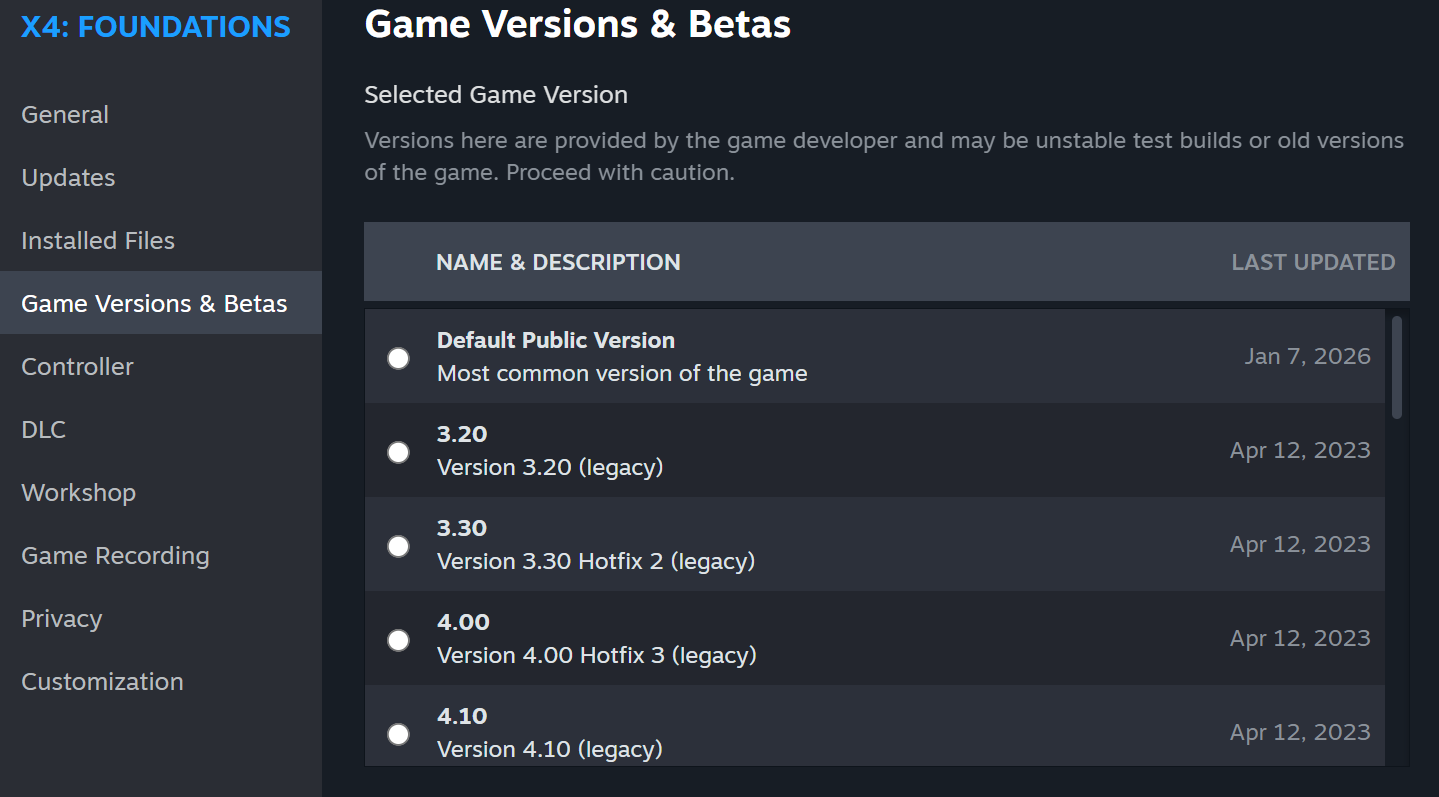
La cosa più importante: se state giocando su hardware più vecchio, non perderete comunque l'accesso al gioco. Sappiamo che alcuni di voi esplorano l'universo di X su hardware meno recente, e vogliamo assicurarci che possiate continuare a giocare. Continueremo a fornire accesso alle versioni precedenti di X4 tramite il sistema di branching di Steam "Versioni e beta del gioco", come facciamo già da tempo.
Come accedere a una versione precedente:- Fate clic con il pulsante destro del mouse su X4: Foundations nella libreria di Steam.
- Selezionate Proprietà, quindi passate alla scheda "Versioni e beta del gioco".
- Selezionate la build precedente richiesta dal menu a tendina.
- Steam scaricherà la versione selezionata e potrete giocare normalmente.
Una volta fatto, Steam visualizzerà la versione del gioco attualmente selezionata accanto al pulsante Gioca, nonché accanto al titolo X4: Foundations nell'elenco dei giochi sul lato sinistro del client Steam.
Ci auguriamo che questo avviso anticipato possa darvi tutto il tempo necessario per prepararvi. Siamo incredibilmente grati per il vostro continuo supporto a X4: Foundations nel corso degli anni e non vediamo l'ora di mostrarvi cosa ci permetteranno di fare in futuro queste nuove fondamenta tecniche. |
|
|
|
|
|
|
| 10.Jun.26 |
X4: Foundations 9.00 Aggiornamento Impero è ora disponibile! |
|
|
|
|
Siamo entusiasti di annunciare il lancio ufficiale di X4: Foundations "Aggiornamento Impero" (9.00)! Questo importante aggiornamento gratuito include nuove caratteristiche e una profonda revisione di alcune meccaniche di gioco, per migliorare l'interazione con il vostro impero sul piano militare, strategico ed economico.
Vogliamo porgere i nostri più sinceri ringraziamenti alla comunità per il fondamentale riscontro durante la fase di Public Beta dell'aggiornamento 9.0, che ci ha aiutato a migliorare molti aspetti nelle ultime settimane. In particolare, il vostro feedback ci è stato immensamente di aiuto nel tarare al meglio i nostri aggiornamenti all'IA.
Qui sotto potete trovare una panoramica delle novità dell'aggiornamento. Per ulteriori dettagli potete dare un'occhiata all' annuncio della fase di Beta Pubblica dell'aggiornamento 9.00.
Per un rapido riepilogo dei principali cambiamenti, guardate il nostro video annuncio della Beta Pubblica 9.0 di Marzo 2026.
Le Novità dell'Aggiornamento 9.00
Miglioramenti al Combattimento
Abbiamo apportato importanti cambiamenti a ogni aspetto del combattimento di X4: Foundations. Si tratta del più grande ribilanciamento del combattimento nella storia di X4. Questo aggiornamento introduce un ribilanciamento totale di centinaia di armi, torrette, scudi e navi per aggiungere profondità tattica, aumentare le opzioni disponibili e risolvere incongruenze. Inoltre le torrette sono più accurate, i piloti dell'IA si comportano in modo più logico, i movimenti delle navi capital sono stati rivisti, e molto altro.
Per ulteriori informazioni riguardo questi importanti cambiamenti agli armamenti e alle navi potete dare un occhiata al topic nel nostro forum dedicato alla Beta.
Riciclo delle Navi Kha'ak
I relitti Kha'ak di dimensioni S ed M possono ora essere riciclati, portando alla produzione di Allografene, un nuovo bene versatile utilizzabile nella produzione di navi ed equipaggiamento. L'allografene si trasforma per rimpiazzare qualsiasi materiale richiesto nei processi produttivi, fornendo una via alternativa per aggirare carenze di materiali durante la produzione.
Poiché la produzione di Allografene richiede Nividio, questo apre a nuove opportunità commerciali attraverso la rete di portali. Alcune fazioni NPC costruiranno stazioni di riciclaggio specializzate per utilizzare questa risorsa.
Per ulteriori informazioni riguardo il riciclo di navi Kha'ak e altri cambiamenti nell'economia potete potete dare un occhiata al topic nel nostro forum dedicato alla Beta.
Modifiche all'Aspetto e Modularità delle Navi
I motori e gli scudi sono ora integrati nei modelli delle navi S ed M. Questo cambiamento migliora drasticamente il loro aspetto e la varietà dei moduli che possono essere equipaggiati. Questo cambiamento porta a un'identità visiva più curata e coerente per tutte le navi presenti nella rete dei portali.
Inoltre i punti di attacco per gli equipaggiamenti nelle navi S ed M hanno ricevuto un aggiornamento, che permette di installare una maggiore varietà di elementi. Ad esempio ora le navi Boron e del Commonwealth possono equipaggiare i reciproci moduli, e possono anche installare armi e torrette più piccole.
Ordini Prioritari
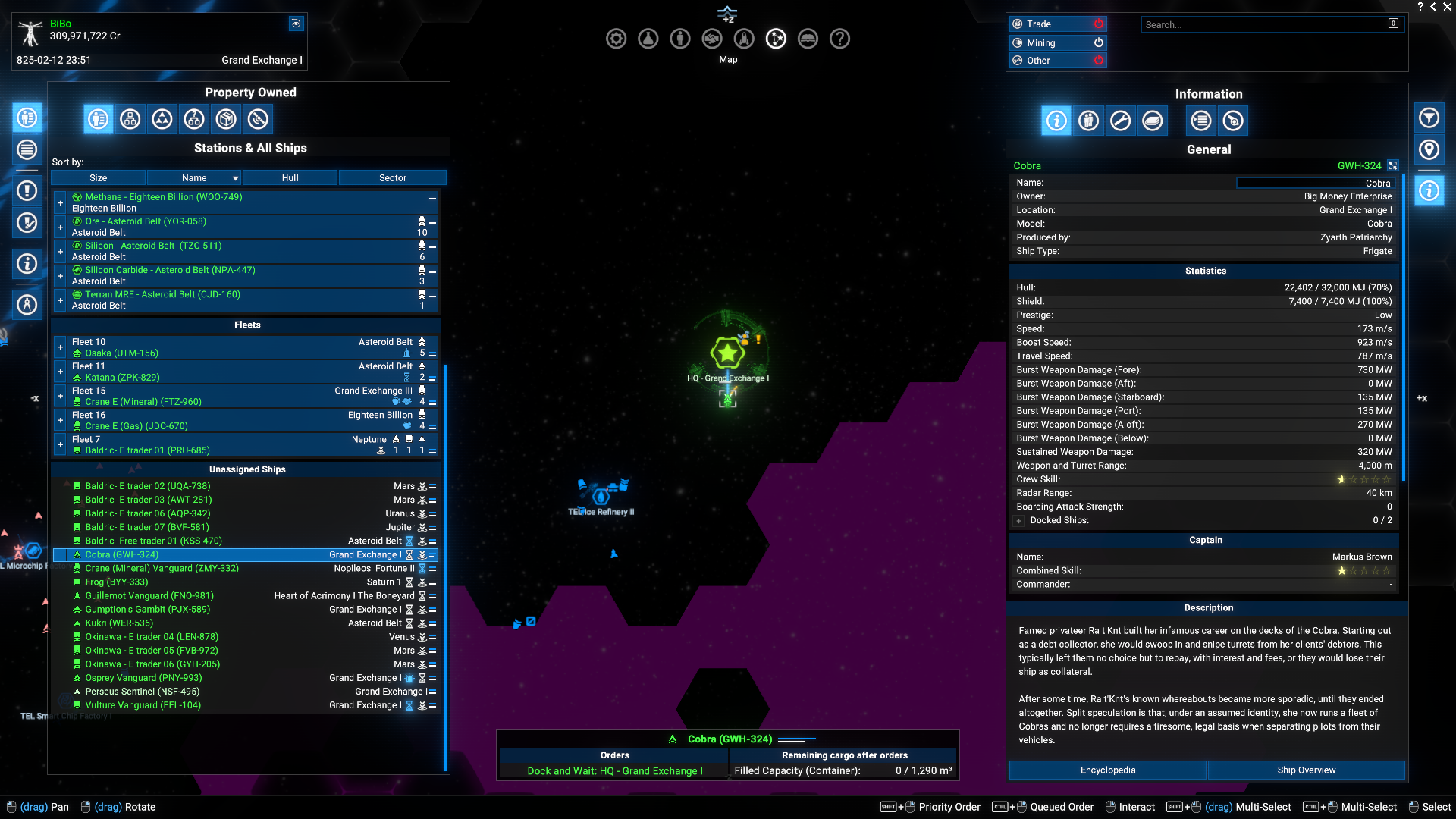
A grande richiesta, questo aggiornamento introduce gli Ordini Prioritari. Questa nuova funzione dell'interfaccia grafica permette di dare ordini immediati in stile RTS, che sostituiscono immediatamente tutti gli altri ordini. Questo permette di migliorare rapidamente la gestione di fasi di gioco strategicamente concitate, eliminando la necessità di configurare liste di ordini e permettendo alle navi di agire immediatamente.
Gli ordini possono essere dati e accodati dalla mappa utilizzando [SHIFT] + [Tasto Destro], mentre gli ordini prioritari possono essere dati tramite [CTRL] + [Tasto Destro] e accodati tramite [CTRL] + [SHIFT] + [Tasto Destro].
Questi modificatori possono essere utilizzati in qualsiasi combinazione per gestire gli ordini come coda o prioritari nel Menu Ordini. Serve che un commerciante raccolga un container blindato e che la sua scorta attacchi un bersaglio vicino? Gli ordini prioritari permettono di assegnare questi comandi rapidamente senza danneggiare la coda di ordini già attiva.
Modulo Showroom Navale
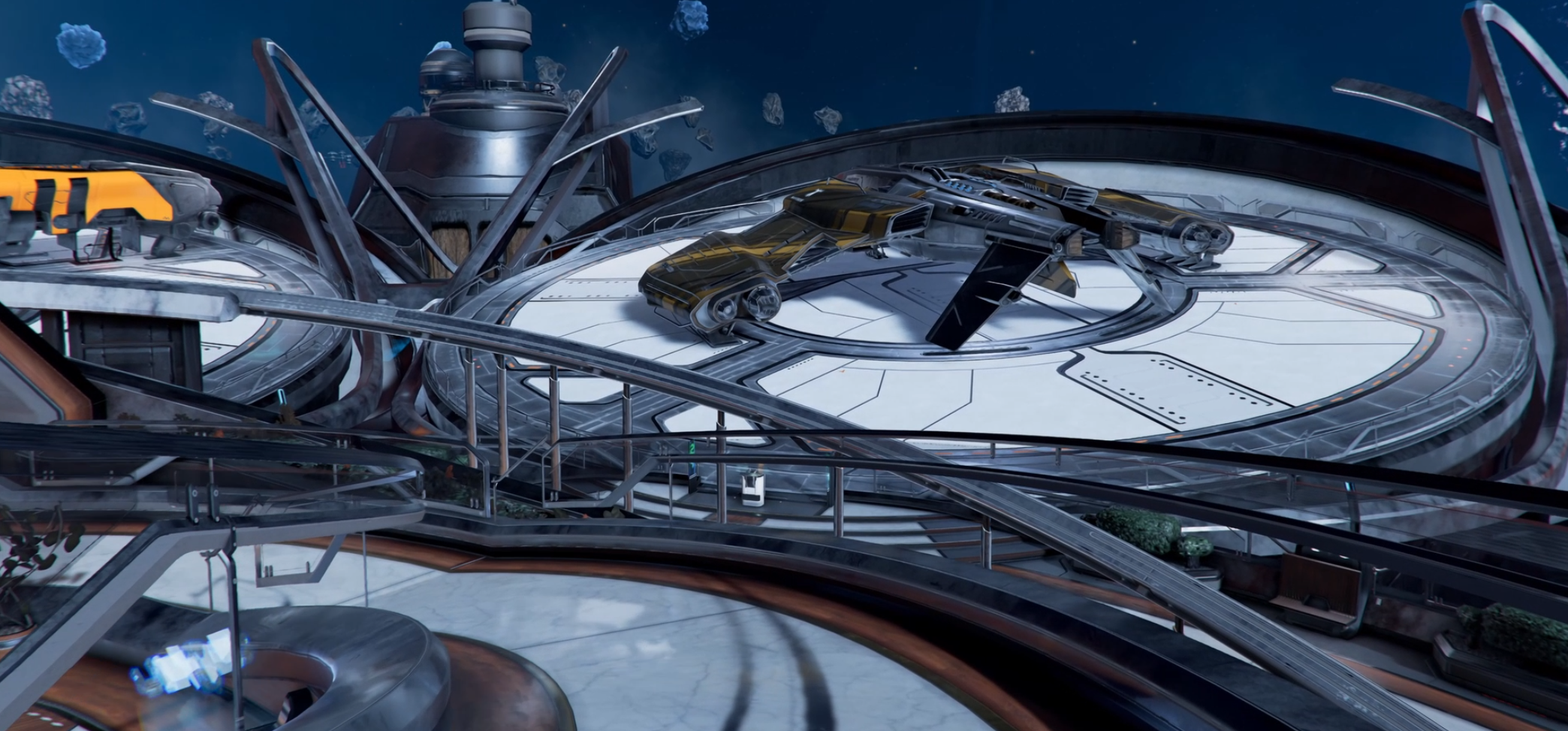
Con l'aggiornamento 9.00 abbiamo aggiunto un nuovo modulo: lo Showroom Navale. Questo modulo permette ai giocatori di conservare e mettere in mostra le proprie navi preferite di dimensioni S ed M su delle eleganti piattaforme di attracco dedicate.
Uno o più Showroom Navali possono essere agganciati a stazioni del giocatore già esistenti, oppure combinati a formare un esteso complesso showroom per mostrare una più ampia collezione di navi - prova a collezionarle tutte!
Modifiche all'Interfaccia Grafica
I cambiamenti all'interfaccia grafica hanno riguardato tutte le aree del gioco, e abbiamo prestato particolare attenzione ai menù della mappa. Questi aggiustamenti allo stile e layout della mappa mirano a migliorare la leggibilità senza danneggiare la struttura informativa.
Per ulteriori informazioni riguardo i cambiamenti all'interfaccia grafica potete consultare il forum Beta Feedback.
Design Migliorati delle Stazioni NPC
Negli aggiornamenti precedenti abbiamo permesso alle fazioni NPC di costruire di stazioni più grandi. In seguito a questi cambiamenti l'aggiornamento 9.0 fornirà alle fazioni NPC la possibilità di costruire ed espandere le stazioni in base a piani costruttivi predefiniti. Le stazioni basate su questi progetti saranno visivamente più coerenti ed elaborate. Inoltre ciò permetterà ai nostri disegnatori di popolare la rete dei portali con stazioni in grado di riflettere meglio l'identità delle fazioni.
Revisione delle Regioni Minerarie
Abbiamo totalmente rivisto la gestione delle aree di risorse, raggiungendo in un colpo solo vari obiettivi: migliori performance, miglior utilizzo di memoria, più controllo degli sviluppatori sulla distribuzione delle risorse e un gameplay più dinamico per i giocatori. Le risorse sono ora localizzate in aree specifiche anzichè essere distribuite nell'intera regione. Inoltre quando un'area di risorse è esaurita possono emergere altre risorse in una posizione diversa all'interno della regione.
Questo crea una nuova dinamica delle operazioni minerarie, per cui le aree ricche di risorse devono essere scoperte prima di poter essere sfruttate. Questo porta a fluttuazioni nella disponibilità di risorse, dovute al fatto che i minatori cercheranno in automatico le aree più efficienti in cui operare.
Abbiamo inoltre rimosso l'influenza delle Sonde Minerarie sull'efficienza estrattiva. Le Sonde Minerarie ora indicano alle navi minerarie dove concentrare i loro sforzi, permettendo così ai giocatori di ottimizzare gli impianti di raffinamento e le strutture difensive senza sentirsi costretti alla microgestione delle Sonde Minerarie.
Per ulteriori informazioni sul nuovo sistema delle risorse potete dare un occhiata al nostro topic nel forum dedicato alla Beta.
Un grazie da parte di tutti noi alla Egosoft per aver giocato e continuare a giocare a X4: Foundations, speriamo che apprezzerete quello che abbiamo fatto con l'aggiornamento 9.00!
L'Aggiornamento Impero è ora fuori dalla Beta, ma come sapete i lavori sul gioco non finiscono mai - quindi per favore continuate a condividere con noi le vostre opinioni, e noi continueremo ad ascoltarle.
>> X4 9.00 Changelog |
|
|
|
|
|
|
| 03.Jun.26 |
L'aggiornamento Impero (9.00) di X4 verrà rilasciato il 10 giugno 2026 |
|
|
|
|
Siamo entusiasti di annunciare che l'Aggiornamento Impero di X4: Foundations (9.00) verrà rilasciato il 10 giugno 2026!
L'Aggiornamento Impero coinvolge ogni aspetto degli imperi in X4: il bilanciamento delle navi e dei loro equipaggiamenti, il modo in cui impartire i comandi, la distribuzione delle risorse nei settori, l'efficacia dei piloti e le possibilità di commercio, produzione e costruzione di stazioni in tutto l'universo.
Questo aggiornamento porta con sé il più grande ribilanciamento nella storia di X4: centinaia di armi, scudi e navi sono stati rielaborati per migliorare notevolmente la combinazioni di equipaggiamento possibili. Le modifiche ai punti di attacco per equipaggiamenti delle navi hanno migliorato ulteriormente questa varietà, consentendo di equipaggiare una gamma molto più ampia di moduli sulle navi. Grazie a numerosi miglioramenti dell'IA, i piloti si comportano in modo più intelligente e in linea con il loro ruolo nella flotta.
Inoltre, una completa rielaborazione del sistema delle risorse ha semplificato le operazioni di acquisizione delle risorse, rendendo allo stesso tempo la geografia galattica più dinamica, con la rigenerazione delle risorse in punti diversi dei settori una volta esaurite.
In aggiunta, le navi Kha'ak possono ora essere rottamate per ottenere una nuova risorsa che, se combinata con il Nividio, crea un prodotto versatile che può sostituire qualsiasi altra merce durante i cicli di produzione. Questo crea un ulteriore meccanismo economico che può alleviare i colli di bottiglia delle produzioni, offrendo al contempo nuove opportunità per le operazioni di rottamazione e per i mercanti.
L'Aggiornamento Impero è un aggiornamento molto esteso, e include molti altri cambiamenti. Per saperne di più su cosa è stato migliorato e aggiunto, date un'occhiata al nostro annuncio dettagliato.
Vogliamo ringraziare tutti coloro che giocano a X4: Foundations, e in particolare coloro che hanno partecipato alla beta e ci hanno fornito feedback. Ci auguriamo che tutti i miglioramenti apportati dall'aggiornamento 9.00, in uscita la prossima settimana, siano di vostro gradimento.
|
|
|
|
|
|
|
| 22.May.26 |
Interview with Helge Kautz: Loremaster of the X Universe |
|
|
|
|
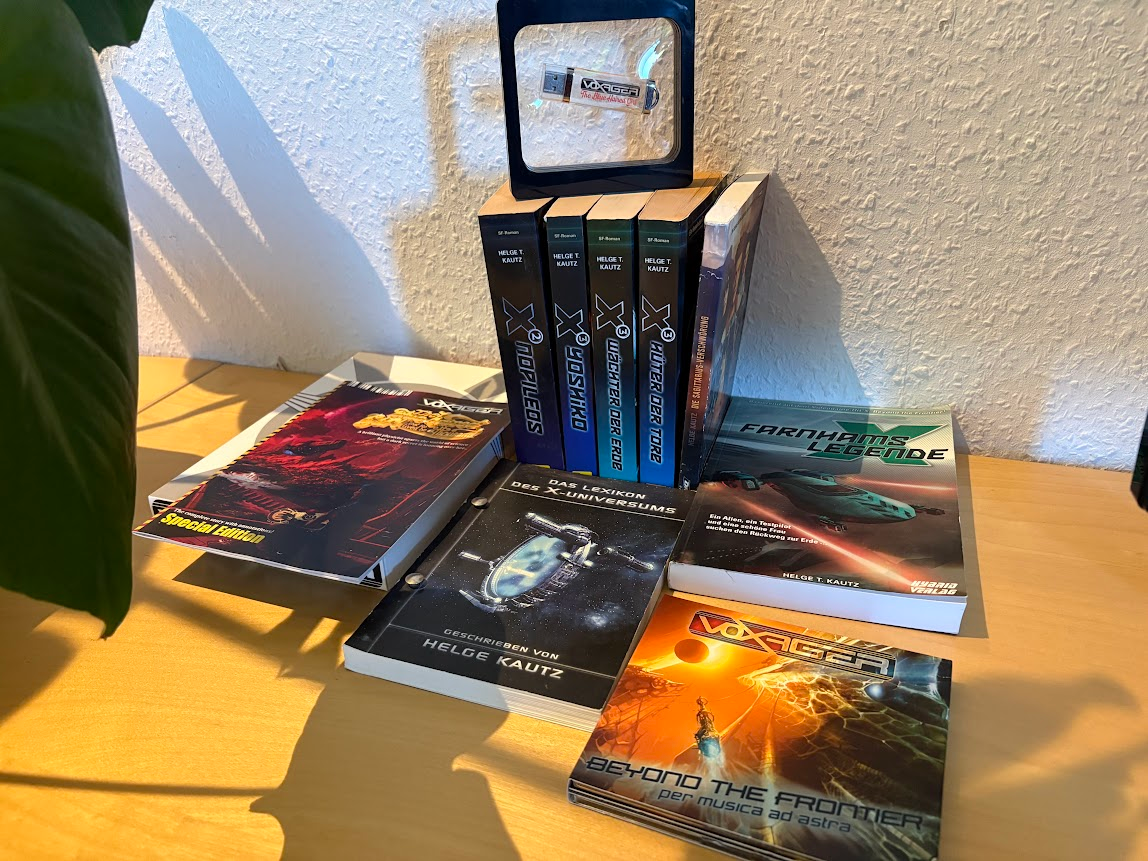
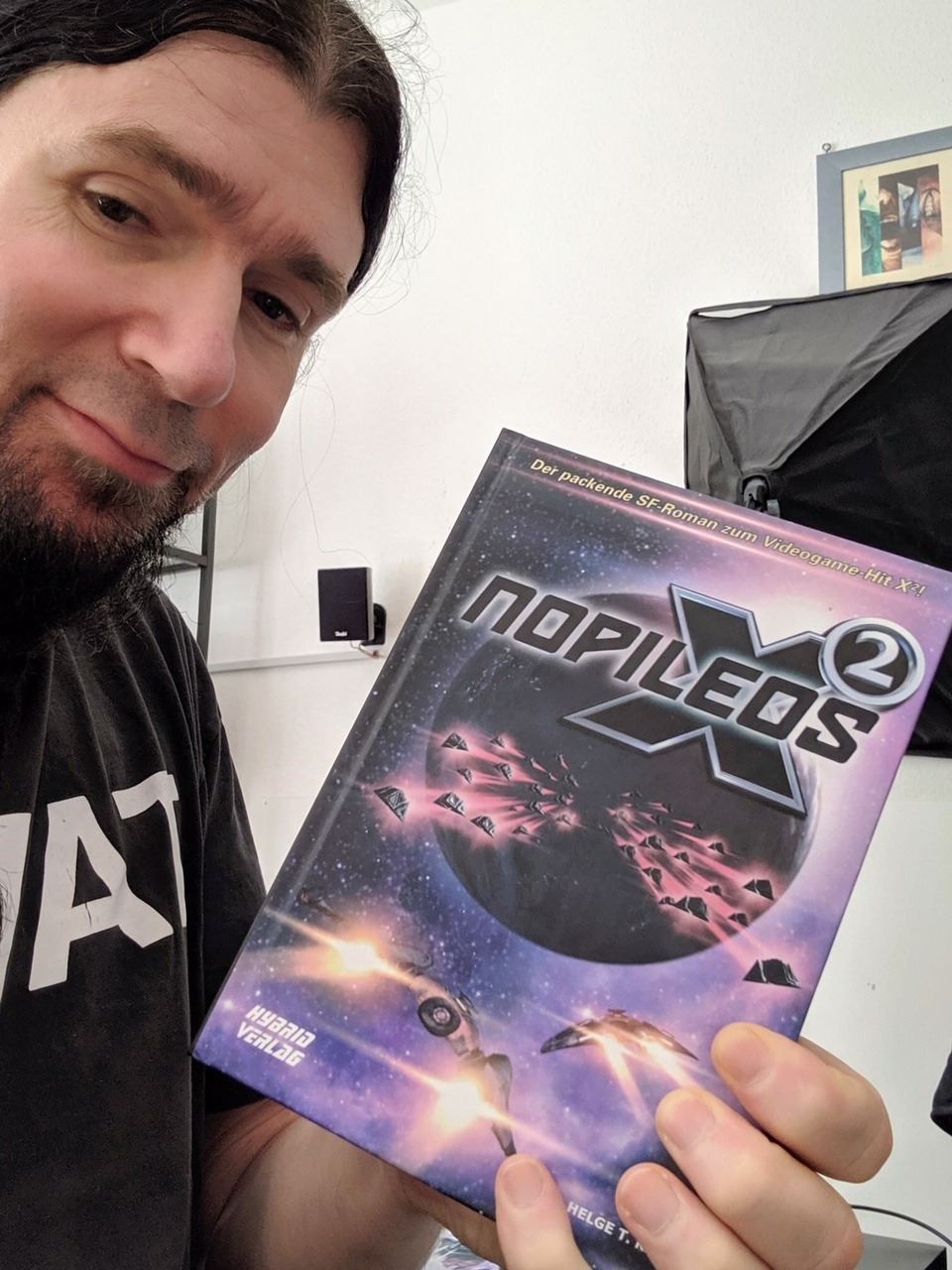
We’re very excited to share a new episode of the Inside Egosoft podcast. Join our new host, Joey, as he speaks with members of the Egosoft team about their work and ideas. In this episode, he sits down with Helge Kautz, our loremaster. Helge is responsible for much of the worldbuilding in the X universe, having written multiple tie-in novels and being our go-to source for anything involving lore.
If you’re interested in exploring the lore further, we encourage you to check out the X Encyclopedia on the Egosoft website, as well as the tie-in novels.
For those who prefer to read, below you’ll find a breakdown of Joey’s discussion with Helge.
Be sure to tune in next month for another episode!
Listen to the Inside Egosoft Podcast:Helge Kautz: Loremaster of the X Universe
Joey: For people who might only know your name from the game credits or the novels, how would you introduce yourself and describe your role at Egosoft today?
Helge: I’m Helge. I’ve been working with Egosoft for 25 years or more, most of that time as a freelancer. I’m the author of the tie-in novels. There are five novels set in the X Universe, and I originated a lot of the back lore from the games. Now that I’ve been working directly for Egosoft for about a year and a half, I’m the loremaster, as well as an author and narrative director. That’s my role.
A Typical Day Building the X Universe
Joey: You mentioned you’re working full-time for Egosoft now. What does a typical day look like for you, if such a thing is even possible?
Helge: I typically come in, grab something to eat, and read through my work email to see if there’s information I should be aware of. There’s lots of interesting stuff there. Then I check my Discord mentions to see if anyone has tagged me and whether I need to respond. After that, I’ll have tasks like writing dialogue for an upcoming DLC or similar narrative work. That’s what I spend most of my time doing. From time to time, someone has lore questions or wants me to name something, and I’ll do that instead. So the day is maybe 75% typical, and the rest isn’t.
Writer First, Game Developer Second
Joey: You’ve been writing for a long time. How do you look at yourself these days? Are you a writer who works in games, or a game developer who writes?
Helge: I’m a writer first. A novelist is probably the right word. That’s what I am, and I’m always thinking as a novelist. I happen to write in game development, which requires different rules, but first and foremost, I’m a novelist. That has always been my passion and still is.
Early Science Fiction Influences
Joey: Can you talk about some of your early influences — books, films, or games that shaped how you write?
Helge: When I was about eight or nine years old, there was a science fiction book series for children. My grandparents would give me one of those books for my birthday and Christmas, and I devoured them. That really kick-started my passion for science fiction. The series had something like 30 books. There were also science fiction audio dramas. One was Commander Perkins. I’m not sure if it exists in the English-speaking world, but it was an action-packed series about a transporter device that takes people into different worlds and times. I loved that one. Then there’s the long-running German science fiction series Perry Rhodan, which I also read. As I got older, I moved on to authors like Larry Niven, Robert Heinlein, Arthur C. Clarke, and Orson Scott Card. Those stayed with me.
The Influence of Larry Niven
Joey: Are there any in particular that had a lasting impact on how you write?
Helge: Definitely Larry Niven. You may know the Ringworld series. He also has the Known Space series, including Ringworld Engineers, as well as books like The Integral Trees and The Smoke Ring. I read everything Niven wrote through the ’70s, ’80s, and ’90s. He’s my biggest role model, and I try to emulate aspects of his writing.
Science Fiction Grounded in Reality
Joey: What does that mean to you — his way of writing?
Helge: Niven tries to be scientifically accurate as much as possible, then introduces one unproven element like faster-than-light travel. Apart from that, everything feels grounded. He has colorful worldbuilding and great characters. Sometimes the character writing is very emotional. I love that, and I try to do the same.
From X: Beyond the Frontier to Farnham’s Legend
Joey: How did you first start writing for the X Universe? What was your first interaction with Egosoft like?
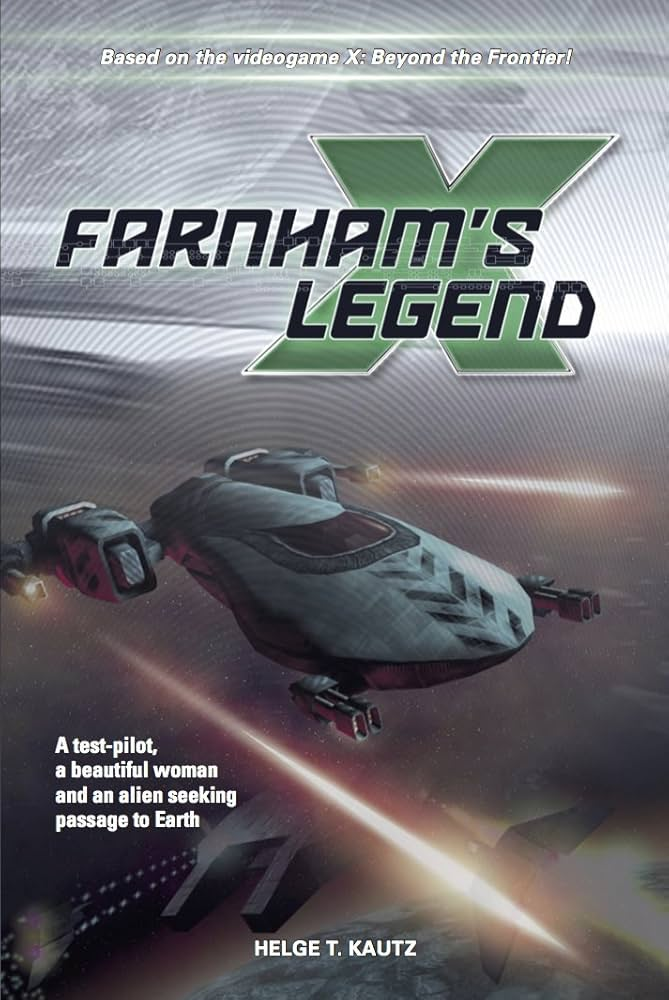
Helge: I’d been writing since I was about 13. In the late ’90s, I was working for THQ, the German publisher for Egosoft at the time. The sequel to X: Beyond the Frontier was being planned, and since I was part of the marketing team, there was discussion about including a bonus item in the expansion package — what today would be DLC. I suggested writing a tie-in novel. Everyone laughed. They said, “You’re the webmaster. Why would you write a novel?” I said I was sure I could do it. They asked me to write a demo chapter. I spent about six weeks planning, wrote it, and they said, “That’s not so bad. Let’s try it.” THQ then asked me to write the full novel, which became Farnham’s Legend.
Writing Novels vs. Writing for Sandbox Games
Joey: The X games are very open-ended sandboxes. How does writing for that universe differ from writing a fixed narrative?
Helge: From day one with Farnham’s Legend, it was clear the book is not the game, and the game is not the book. There are game mechanics you can’t really write into a novel because they would feel silly. In the game, they feel normal, but it’s different in prose.
Building the Lore of the X Universe
Joey: How do you approach building a universe?
Helge: Many authors start with planets and species. I don’t. I start with story and characters, and how they interact. Questions come up naturally. If we’re 1,000 years in the future, how do genders interact? Is there still marriage? As I write, I fill in these details and keep separate notes. My worldbuilding happens during writing, not before.
Hidden Details Players Might Miss
Joey: Is there lore you’re especially proud of, even if players might not notice?
Helge: There’s a lot people don’t know. For example, the meaning behind Teladi three-word names and their numerical elements. I have detailed explanations for that. There’s the marriage system in the Argon Federation and how it evolved. Language shifts over centuries. Cultural changes. There’s also what I call the “Argon phenotype,” referring to how humans in the Argon Federation look slightly different due to separate development.
Factions, History, and Isolation
Joey: Do you have a favorite faction?
Helge: The connection between the Argon and the Terrans is especially interesting — Earth, the discovery of the jump gates, the Terraformer War, and 750 years of lost contact. Something similar happened to the Teladi, who were cut off from Ianamus Zura without knowing the Terraformer War was responsible. Aldrin was also isolated due to Argon political decisions. There are many intertwined stories like that.
Collaborating with the Development Team
Joey: What’s it like collaborating with designers and artists at Egosoft?
Helge: Anything lore-related comes to me. If something changes about a species — size, eyes, fingers — I’m consulted. For example, the Split should have six fingers. I check things like that for lore accuracy. I also name most things now. I don’t influence weapon types or ship mechanics. I focus on naming and lore consistency.
The Challenge of Player-Driven Storytelling
Joey: Do you ever have to cut ideas you love?
Helge: Yes. The game is meant for players to create their own stories. I’d love to tell very specific character stories, but that isn’t always possible. That hurts sometimes, but it’s part of the process.
Looking Beyond the Current Timeline
Joey: What keeps you motivated after all these years?
Helge: We’re going to pass the year 825 eventually, where X4 is currently set. I’m excited to go beyond that point and explore the future of the universe.
How Far Ahead the Lore Is Planned
Joey: How far ahead have you planned?
Helge: Very far. I wrote a pitch set about 2,000 years beyond the current timeline, around the Earth year 5600. I know where things are going, but we won’t see that in the games anytime soon.
Advice for Aspiring Writers
Joey: Any advice for aspiring writers or worldbuilders?
Helge: Consume the medium you love as much as possible. If you want to write science fiction, read it constantly. Watch it, absorb it. Then write. Don’t expect your first work to be AAA quality. If you’re passionate and keep creating, you’ll grow into it.
Where to Start Exploring the Lore
Joey: If players want to dive deeper into X lore, where should they start?
Helge: The Encyclopedia of the X Universe on the Egosoft website is the best starting point. It’s a bit hidden right now, but we want to bring it forward more. It’s about 15 years old, but the core is still accurate, and I’m working on updates. Then, of course, the novels. They’re the best entry point into the lore.
Final Words to the Community
Joey: Any final remarks?
Helge: Thank you very much for the opportunity to talk about the X Universe. If players have questions about the lore, they can post on the forum or message me there. I’m happy to answer what I can. |
|
|
|
|
|
|
| 11.Mar.26 |
La beta pubblica di X4 Foundations 9.00 Aggiornamento Impero è ora disponibile |
|
|
|
|
Siamo entusiasti di dare il via alla beta pubblica per X4: Foundations 9.00 "Aggiornamento Impero"! Questo aggiornamento gratuito include numerose caratteristiche e revisioni che influenzano il modo in cui si combatte, la strategia e l'economia.
L'Aggiornamento Impero comprende un lavoro di ribilanciamento su centinaia di armi, navi e scudi, oltre a miglioramenti radicali al combattimento che metteranno alla prova le vostre abilità di pilotaggio. Insieme ad altri miglioramenti dell'IA, il combattimento sarà più dinamico, impegnativo e gratificante.
Oltre ai diversi miglioramenti apportati al combattimento, abbiamo anche implementato la funzione Ordini Prioritari, molto richiesta, per impartire rapidamente gli ordini, in modo da gestire al meglio la vostra flotta nel mezzo dei combattimenti più impegnativi dell'Aggiornamento Impero! Non solo, una nuova pipeline di gestione delle risorse ci ha permesso di migliorare la grafica delle navi e di aumentare la varietà degli equipaggiamenti nell'aggiornamento 9.00.
Con questo aggiornamento, sono in arrivo diverse funzionalità significative non legate al combattimento: le navi Kha'ak possono ora essere riciclate in una nuova versatile merce, che aggiunge un ulteriore livello all'economia, mentre una significativa revisione del sistema delle aree di risorse cambia il modo in cui nuove risorse possono emergere dopo che un'area è stata esaurita.
Questo aggiornamento include anche un nuovo modulo di stazione per collezionisti, lo "Showroom Navale", aggiornamenti all'interfaccia utente e al menu della mappa, stazioni PNG più elaborate che enfatizzano maggiormente l'identità delle fazioni, e altro ancora.
Maggiori dettagli e un changelog completo sono disponibili in questo post di notizie. Partecipate alla nostra Beta Pubblica per provare l'aggiornamento in prima persona.
Come si partecipa alla Beta Pubblica?
Tutti i giocatori che possiedono X4: Foundations hanno la possibilità di scaricare la nuova versione 9.00 Beta Pubblica. Per garantire che i partecipanti alla beta siano consapevoli dei rischi e delle regole, chiediamo a tutti i giocatori interessati di visitare il nostro forum, dove troveranno le regole e le clausole di esclusione della responsabilità, oltre alle istruzioni pratiche per partecipare alla beta. Seguite questo link al nostro forum - non è richiesta la registrazione - per trovare le informazioni pertinenti.
>> Changelog di X4 9.00 Beta Pubblica 1
Meccaniche di Combattimento
Le modifiche più importanti al sistema di combattimento si trovano sotto il cofano. Abbiamo lavorato minuziosamente su una serie di problemi minori di mira delle armi. Ogni miglioramento preso da solo è relativamente piccolo, ma l'effetto combinato di questo sforzo dovrebbe avere un significativo impatto positivo sul feeling e sull'esito del combattimento: - La precisione delle torrette è stata notevolmente migliorata.
- Gli incrociatori sfruttano maggiormente le loro batterie principali, beneficiando anche di miglioramenti alla manovrabilità e alle torrette.
- La mira dei piloti AI è ora più organica. A seconda dell'abilità del pilota, le manovre evasive e gli spostamenti laterali sono più efficaci nel confonderne la mira.
L'aggiornamento 9.00 include inoltre una serie di caratteristiche più evidenti per il combattimento: [*]Le navi possono ora tenere conto di un fattore di calore delle armi; le navi con molte armi possono, ad esempio, surriscaldarsi più velocemente.
- Allo stesso modo, le navi possono ora avere modificatori di scudo per aumentare la capacità o la velocità di ricarica.
- Le statistiche principali di motori, scudi e armi sono ora mostrate nella schermata di equipaggiamento della nave.
- I siluri possono ora essere presi di mira, e l'intercettazione dei missili è stata generalmente migliorata.
- La ricarica delle munizioni viene ora visualizzata sull'HUD.
Movimenti delle Navi Capital
Oltre ai miglioramenti apportati al puntamento delle armi nella versione 9.00, abbiamo investito sforzi analoghi nella revisione dei movimenti delle navi capital. Insieme, queste modifiche influenzano notevolmente le loro prestazioni in combattimento. Visitate il forum Egosoft per una richiesta di di test specifica su questo argomento.
Ribilanciamento delle Navi
Stiamo modificando sia le dimensioni fisiche delle armi per le navi di classe S e M, che i parametri con cui vengono installate. Questo non migliorerà soltanto l'aspetto visivo, ma ci permetterà anche di adattare la compatibilità delle armi. Visitate il forum Egosoft per una richiesta di di test specifica su questo argomento.
Questo aggiornamento include un ribilanciamento completo di oltre 200 armi e torrette, oltre 90 scudi e molte delle nostre oltre 200 navi. In questo caso, l'obiettivo è correggere le incongruenze, aggiungere maggiore profondità tattica e distribuire i punti di forza e di debolezza in modo più intuitivo: - I prezzi riflettono meglio il livello di qualità delle navi e degli equipaggiamenti.
- Le navi più grandi sono meno vulnerabili alle armi di piccole dimensioni.
- Le navi pesantemente corazzate e schermate sono un'opzione più praticabile.
- Le torrette hanno maggiore varietà da una fazione all'altra.
Riciclaggio delle Navi Kha'ak
Con la versione 9.00, i relitti Kha'ak di classe S e M possono essere riciclati. Il nuovo ciclo di riciclaggio porta alla produzione di Allografene, una merce trasmutabile che può essere utilizzata nella produzione di navi ed equipaggiamento. Quando è presente, l'Allografene si trasmuta per sostituire qualsiasi merce non presente in magazzino, consentendo modi alternativi per gestire le carenze.
La produzione di Allografene richiede Nividio, creando una maggiore domanda di Nividio e aprendo nuove opportunità commerciali, soprattutto per gli imprenditori minerari. Alcune fazioni di PNG costruiranno stazioni di riciclaggio specializzate per utilizzare questa nuova risorsa. Visitate il forum Egosoft per una richiesta di test specifica su questo argomento.
Modifiche Modulari e Visive delle Navi
I motori e gli scudi sono ora integrati nei modelli delle navi S e M, migliorando l'aspetto complessivo delle singole navi e aumentando notevolmente la varietà di moduli che queste possono equipaggiare. Anche se l'equipaggiamento non influisce più sull'aspetto di queste navi, questo cambiamento ci permette di avere un'identità visiva più caratterizzata e coerente per tutte le navi disponibili.
Tutte le navi S e M (precedenti a Kingdom End) hanno anche ricevuto un lifting alle posizioni dei punti di attacco per gli equipaggiamenti, consentendo, ad esempio, alle navi Boron e Commonwealth di equipaggiare i rispettivi moduli e di equipaggiare armi/torrette più piccole. Come parte di questa operazione, tutte le torrette di medie dimensioni utilizzate dalle navi M sono state ricostruite da zero.
Ordini Prioritari
Gli Ordini Prioritari sono una nuova funzione, basata sulla richiesta dei giocatori di avere ordini più immediati, in stile "RTS", che possano essere impartiti rapidamente in scenari dal ritmo incalzante. Gli Ordini Prioritari saranno sempre eseguiti prima di quelli normali, il che significa, che i giorni in cui si doveva mettere mano all'elenco degli ordini ogni volta che si voleva che una nave facesse qualcosa immediatamente, sono finalmente finiti!
I giocatori possono impartire e mettere in coda gli ordini dalla mappa usando [CTRL] + [Clic Destro], oppure possono impartire Ordini Prioritari usando [MAIUSC] + [Clic Destro] o mettere in coda gli Ordini Prioritari con [CTRL] + [MAIUSC] + [Clic Destro], da soli o in combinazione tra loro.
Questi modificatori possono essere usati per impostare dei waypoint sulla mappa o per mettere in coda/priorità tutti i tipi di ordini nel menu degli ordini. Volete riparare rapidamente una nave, recuperare un container blindato o attaccare un bersaglio specifico senza dover fare i conti con la vostra elaborata coda di ordini? Ora è possibile.
Questo comporta una modifica al comportamento del menu degli ordini: ora, se non viene usato un tasto modificatore, tutti gli ordini in coda verranno sovrascritti. I giocatori hanno l'opzione di invertire questo comportamento del menu per evitare di sovrascrivere accidentalmente le loro code di ordini, se preferiscono il comportamento precedente.
Modulo Showroom Navale
L'aggiornamento 9.00 introduce un nuovo modulo di stazione: lo Showroom Navale. Questo modulo può essere utilizzato per conservare ed esporre con stile le vostre navi preferite. A seconda del modulo Showroom costruito, si possono esporre solo navi di classe S, oppure sia navi S che M. Basta attraccare con una nave, o ordinare a uno dei propri piloti di farlo, e la nave rimarrà esposta sulla piattaforma a tempo indeterminato.
Uno o più Showroom Navali possono essere collegati a una stazione esistente di proprietà del giocatore, oppure il modulo può essere utilizzato da solo per creare una stazione Showroom separata. I collezionisti di navi più prolifici possono anche costruire un complesso esposistivo, composto da diversi moduli Showroom Navali, per ammirare la loro armata di acquisizioni.
È importante considerare che se il modulo Showroom Navale viene distrutto o smontato, le navi esposte andranno perse.
Modifiche all'Interfaccia Utente e al Menu della Mappa
Oltre ad alcune modifiche generali allo stile visivo che sono state estese a tutte le aree del gioco, ci siamo concentrati su modifiche più specifiche ai menu della schermata della mappa. Questi aggiustamenti al layout e al modo in cui vengono presentate alcune informazioni sono finalizzati a migliorare la leggibilità, ma la struttura delle informazioni presentate è rimasta in gran parte la stessa.
Prenderemo in considerazione i feedback che riceveremo su queste modifiche per applicarli alle prossime iterazioni, non solo per la schermata della mappa ma anche per altri menu, nei futuri aggiornamenti. Visitate il forum Egosoft per una richiesta di test specifica su questo argomento.
Design Migliorati delle Stazioni PNG
Nei precedenti aggiornamenti, abbiamo permesso alle fazioni PNG di costruire stazioni più grandi. In questo aggiornamento, estendiamo questa funzionalità consentendo all'IA delle fazioni di utilizzare e ampliare piani di costruzione predefiniti. Le stazioni basate su questi piani di costruzione saranno visivamente più coerenti ed elaborate di quelle generate con il metodo di costruzione standard e consentiranno ai nostri progettisti di esprimere più chiaramente la filosofia di design e l'identità visiva di ciascuna fazione.
Revisione delle Regioni Minerarie
Abbiamo completamente rivisto il modo in cui vengono gestite le aree di risorse, per renderle più efficienti in termini di prestazioni e memoria utilizzata, oltre a garantire un migliore controllo sulla distribuzione delle risorse per noi, e un gameplay più avvincente per voi.
La distribuzione delle risorse all'interno di una regione è ora gestita in modo diverso: le risorse sono localizzate piuttosto che distribuite nell'intera regione. Inoltre, quando una determinata area di risorse è esaurita, possono emergere nuove risorse in una posizione diversa all'interno della regione. Questo comporta una nuova dinamica per le operazioni minerarie, in cui le aree di risorse dovranno essere individuate prima di poter essere sfruttate, con una conseguente maggiore fluttuazione della disponibilità di risorse, in quanto i minatori cercheranno luoghi di estrazione efficienti.
Cosa c'è in Arrivo?
Come per i precedenti aggiornamenti principali, lo sviluppo non si ferma con l'inizio della Beta Pubblica. Questa fase di feedback è una parte essenziale del processo e ci impegniamo a perfezionare ulteriormente l'aggiornamento, guidati sia dalle nostre idee che, cosa altrettanto importante, dalle vostre informazioni. Vi invitiamo a condividere i vostri pensieri e le vostre esperienze nel forum di Feedback della Beta pubblica e ad aiutarci a dare forma insieme alla versione finale dell'aggiornamento.
Grazie per il vostro sostegno! |
|
|
|
|
|
|
| 13.Feb.26 |
Support for Cross-platform Cloud Saves |
|
|
|
|
UPDATE: These changes have now been applied. Please take a moment to review the instructions in the original news post and follow them carefully.
We're preparing some changes in order to support cross-platform cloud saves between Windows, Linux, and Steam Deck for X4: Foundations. For the vast majority of players, this transition will be completely seamless and will require no action.
The changes can, however, affect players who regularly play on Linux computers. Steam Deck players are not affected, unless a native Linux runtime was explicitly selected in the Steam Deck settings for X4.
The changes are planned to happen on Thursday, February 19, 2026 at 15:00 CET (14:00 UTC, 6am PST, 9am EST, 22:00 CST - see in your timezone).
What this means:- After these changes, the Steam Cloud will sync savegames and game settings across Windows, Linux, and Steam Deck.
- For most players, nothing needs to be done.
- For Linux desktop players, there is a risk that saves and settings get lost. To avoid that, please see the instructions below.
Instructions:
If you have X4 savegames on a Linux machine that you would like to keep, please make backups of them. We highly recommend doing that before the changes take effect. Making backups is generally also a good idea on Windows. See the save locations below.
Additionally, after our changes are in place, please follow these steps: - Restart the Steam client on your Linux machine
- Run X4 on your Linux machine
- Exit X4 (Steam will update the files in your Steam Cloud)
This makes sure that your saves and settings get migrated properly in the Steam Cloud. If you do not follow these steps, there is a risk that they will get lost when you first play the game on a different machine.
Locations of saves and settings:
Windows:
Documents/Egosoft/X4/--steamid--
Linux:
~/.config/EgoSoft/X4/--steamid--
Steam Deck (default Proton runtime):
~/.steam/steam/steamapps/compatdata/392160/pfx/drive_c/users/steamuser/Documents/Egosoft/X4/--steamid--
--steamid-- stands for a unique number that represents your Steam account.
If you cannot find your saves in the locations above, you may still find them stored in the Steam Cloud. You can manually download them from the Steam Cloud website and place them in your local savegame folder.
Additional info:
Previously, the Steam Cloud had distinct storage locations for Windows files and for Linux files. This meant that saves did not automatically sync across the two platforms. (At the moment, the Steam Deck uses the Windows version of X4 by default, so it syncs with a Windows PC, but not with a Linux PC.)
With the changes, both Linux and Windows save files will be stored in the Steam Cloud with a Windows-like path. Upon syncing files from the Steam Cloud to a Linux machine, the paths will be translated to the corresponding Linux location on the disk, so that files are downloaded from and uploaded to the Windows location. Linux players will need to play the game at least once on Linux, so that Steam will upload any existing Linux files to the new cloud location.
These changes are an important step toward improving Linux and Steam Deck support for X4: Foundations (particularly, allowing us to use the native Linux version on the Steam Deck by default). They also enable a number of fixes and improvements that we’ve wanted to deliver for quite some time.
Thank you for your patience and your support. |
|
|
|
|
|
|
| 21.Dec.25 |
XLOG di Natale 2025: Uno Sguardo Indietro, Uno Sguardo Avanti |
|
|
|
|
Con il 2025 che volge al termine, celebriamo un traguardo molto speciale: sette anni di X4: Foundations! In un nuovissimo video XLOG, il fondatore e amministratore delegato di Egosoft, Bernd Lehahn, ripercorre un altro anno di aggiornamenti e nuovi contenuti, tra cui i nostri recenti Ship Pack, dando inoltre un primo sguardo a ciò che è in arrivo.
Per celebrare questo anniversario, il gioco base di X4 è ora scontato del 90% durante i Saldi Invernali di Steam. Se stavate aspettando per introdurre i vostri amici nell'universo di X, questo è il momento perfetto. Naturalmente sono previsti sconti anche sulle espansioni e sui titoli precedenti della serie. Consultate la nostra pagina degli sviluppatori su Steam per trovare tutte le offerte attualmente in corso!
>> XLOG di Natale 2025: Uno Sguardo Indietro, Uno Sguardo Avanti
Questo XLOG discute anche diversi approfondimenti sullo sviluppo, tra cui:
Un primo assaggio delle modifiche al combattimento e alle navi
Nell'ambito dell'imminente aggiornamento 9.00, stiamo iniziando a rivisitare e aggiornare i modelli di navi creati molti anni fa. Con la significativa evoluzione della pipeline artistica avvenuta dai primi giorni di sviluppo di X4, è giunto il momento che le vecchie navi di classe piccola e media ricevano la meritata attenzione. Questa transizione verso i nostri standard attuali non solo supporta i futuri lifting e le nuove funzionalità delle navi, ma ci permette anche di ripensare alla compatibilità delle armi e di prendere decisioni di bilanciamento più incisive.
Allo stesso tempo, il team sta lavorando a un ribilanciamento completo dell'ampio arsenale di armi, torrette e scudi di X4. Insieme ai miglioramenti apportati alla meccanica delle armi, al comportamento dell'IA di combattimento e all'interfaccia utente - compreso un nuovo modo di impartire ordini di combattimento ad alta priorità - questi cambiamenti mirano a rendere le battaglie spaziali più dinamiche, tattiche e divertenti.
Miglioramenti al motore grafico
Bernd si prende un momento per approfondire il tema della DLSS Frame Generation, una funzione che abbiamo introdotto all'inizio di quest'anno, spiegando come funziona e perché è particolarmente vantaggiosa per un gioco come X4.
Cosa c'è in arrivo?
Lo sviluppo del nostro prossimo aggiornamento gratuito per X4: Foundations (9.00) procede regolarmente, e stiamo puntando a dare il via alla fase di Beta pubblica all'inizio del 2026. Come di consueto, approfondiremo tutti i miglioramenti e i cambiamenti che verranno apportati con il prossimo aggiornamento principale una volta avviata la fase di Beta pubblica.
Grazie per un incredibile settimo anno di X4!
Buon Natale e buone feste, ci vediamo nello spazio! |
|
|
|
|
|
|
| Potete trovare le vecchie news nel nostro archivio... |
|
|
|
|
|
|
|
|
|
Community
|
|
|
|
|
Ultimo Screenshot
|
|
|
|
|
X4: Foundations |
|
| |
|
X Rebirth |
|
| |
|